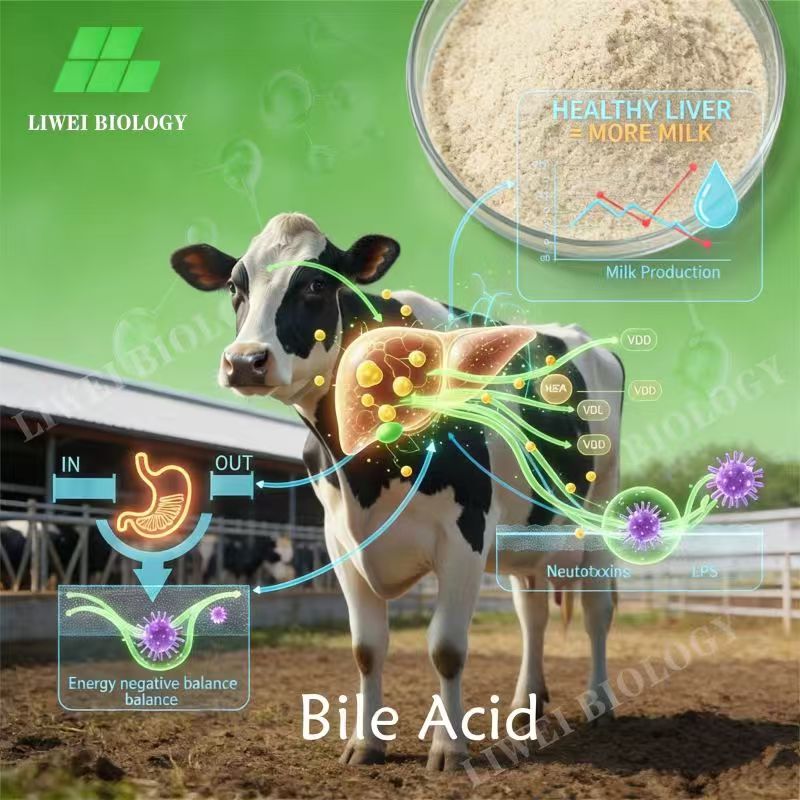
Why Bile Acids Matter NowDuring the transition period (3 weeks before to 3 weeks after calving)?
a cow enters a Negative Energy Balance (NEB). She can’t eat enough to keep up with the energy demands of making milk, so she starts breaking down body fat.1. Metabolic ManagementBile acids aren’t just passive fluids; they are “hormone-like” signals. They interact with receptors like FXR (Farnesoid X Receptor) and TGR5.Glucose Production: They help stimulate gluconeogenesis (the creation of new glucose) in the liver, which is vital because the udder has a massive “thirst” for glucose to create lactose.Fatty Liver Prevention: By regulating lipid metabolism, bile acids help the liver export fat rather than storing it, reducing the risk of Fatty Liver Syndrome.2. The Gut-Liver AxisThe periparturient period often involves diet changes (moving from forage-heavy to concentrate-heavy diets).Barrier Integrity: Bile acids help maintain the intestinal barrier.Inflammation Control: If the gut “leaks” due to stress or diet changes, endotoxins can enter the bloodstream. Bile acids can help neutralize these toxins, keeping systemic inflammation in check.
The Benefits of Supplementing Bile AcidsRecent research suggests that adding exogenous bile acids to transition diets can provide a safety net:BenefitHow it WorksImproved DigestionEnhances the emulsification and absorption of dietary fats.Liver ProtectionReduces the accumulation of non-esterified fatty acids (NEFA) in liver cells.Ketosis ReductionBy improving energy efficiency, it lowers the production of ketone bodies. Better Peak MilkA healthier liver in early lactation translates to a higher, more sustainable milk curve. Summary for Producers the “Transition Cow” is a metabolic athlete. Supporting her with bile acids is like giving an athlete a specialized recovery drink—it optimizes her internal chemistry so she can focus on what she does best: producing high-quality milk while staying healthy. But note: Always consult with a ruminant nutritionist before making significant changes to transition rations.
News

Optimizing Aquatic Health: The Role of Bile Acids in Modulating Hematological Profiles
Optimizing Aquatic Health: The Role of Bile Acids in Modulating Hematological Profiles In aquaculture, fish