Why Bile Acids Matter for Transition Cows During the Calving Transition Period
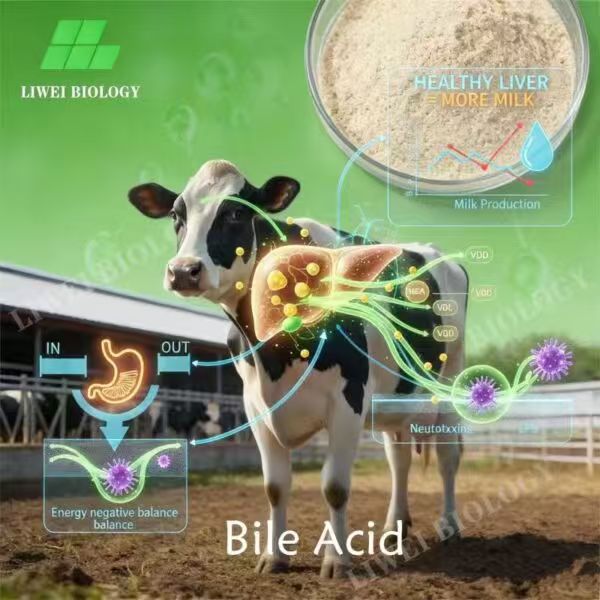
The transition period — 3 weeks before calving to 3 weeks after calving — is the most challenging phase for dairy cows. During this window, cows commonly fall into Negative Energy Balance (NEB). A fresh cow cannot consume enough feed to match the sharp rise in energy demand for milk production. To fill this energy gap, her body starts mobilising and breaking down stored body fat. This metabolic shift raises major risks: fatty liver, ketosis, gut leakage and systemic inflammation. That is where bile acids play a critical role.
How Bile Acids Support Metabolic Management in Transition Cows?
Bile acids are far more than simple digestive fluids. They act as hormone-like signalling molecules that bind to key receptors including FXR (Farnesoid X Receptor) and TGR5 to regulate whole-body metabolism.
Boost Glucose Production for Lactation
Bile acids help stimulate hepatic gluconeogenesis, the process of making new glucose inside the liver. The mammary gland needs large amounts of glucose to build lactose for milk. Stable glucose supply directly supports a smooth start to lactation.
Reduce the Risk of Fatty Liver Syndrome
When dairy cows mobilise body fat, large volumes of non-esterified fatty acids (NEFA) travel to the liver. Bile acids regulate lipid metabolism and encourage the liver to export fat instead of storing it. This function lowers the chance of dangerous fatty liver syndrome in periparturient cows.
Bile Acids Strengthen the Gut-Liver Axis Around Calving
The transition diet changes drastically at calving: rations shift from forage-heavy dry cow feed to concentrate-heavy lactation feed. This rapid diet switch, combined with calving stress, puts pressure on the intestinal tract.
Protect Intestinal Barrier Integrity
Bile acids help maintain a tight, healthy intestinal barrier. A strong gut wall stops unwanted particles from leaking out of the digestive tract.
Control Endotoxins and Systemic Inflammation
Gut leakage allows endotoxins to escape into the bloodstream and trigger widespread inflammation. Supplemental bile acids help neutralise these endotoxins and keep inflammation under control for transition dairy cows.
Key Benefits of Supplementing Bile Acids in Transition Cow Rations
Latest dairy nutrition research confirms that adding exogenous bile acids to transition diets creates a valuable metabolic safety net for fresh cows.
| Benefit | How Bile Acids Work |
|---|---|
| Improved fat digestion | Enhances emulsification and absorption of dietary fats |
| Liver protection | Limits NEFA build-up inside liver cells |
| Ketosis reduction | Improves overall energy efficiency and cuts ketone body formation |
| Higher and more stable peak milk yield | A healthy liver in early lactation supports a stronger, longer-lasting milk curve |
Summary for Dairy Producers
Your transition cow is a metabolic athlete facing huge physiological stress around calving. Supplementing with bile acids works like a targeted recovery support. It optimises liver and gut metabolism, helping her stay healthy while producing high-quality milk.
Important note: Always consult a professional ruminant nutritionist before adjusting your transition cow ration or adding bile acid supplements.
FAQ About Bile Acids for Transition Cows
What is the transition period for dairy cows?
The transition period covers 3 weeks before calving through 3 weeks after calving. This is the high-risk window for metabolic diseases such as ketosis and fatty liver.
Can bile acids prevent ketosis in fresh cows?
Bile acids improve liver energy metabolism and reduce ketone production. They are a supportive nutritional tool to lower ketosis risk, not a replacement for balanced transition rations.
Do I need a nutritionist to add bile acids to my dairy ration?
Yes. Every herd has different body condition, feed quality and farm management. Work with a ruminant nutritionist to design the correct inclusion rate for your transition cows.